Skip to content

Teak vs Rattan vs Aluminium Furniture: Which Material Suits Your Garden
By Sebastian Hale 5 min read

Three materials dominate outdoor furniture in the UK: teak, rattan and aluminium. Each has genuine strengths, and the right choice depends on your space, how you use it and how much time you want to spend on upkeep.
Teak has built its reputation over centuries of use in shipbuilding and fine carpentry. Rattan (particularly synthetic weave) has become the default for modern patio sets. Aluminium frames now underpin everything from bistro chairs to full dining collections.
This guide breaks down the real differences between all three, so you can choose with confidence rather than guesswork. We cover durability, weight, maintenance, cost and which material works best for different garden setups. For a deeper look at teak specifically, read the full pros and cons of teak garden furniture.
Teak: The Heavyweight With a Lifetime Ahead of It
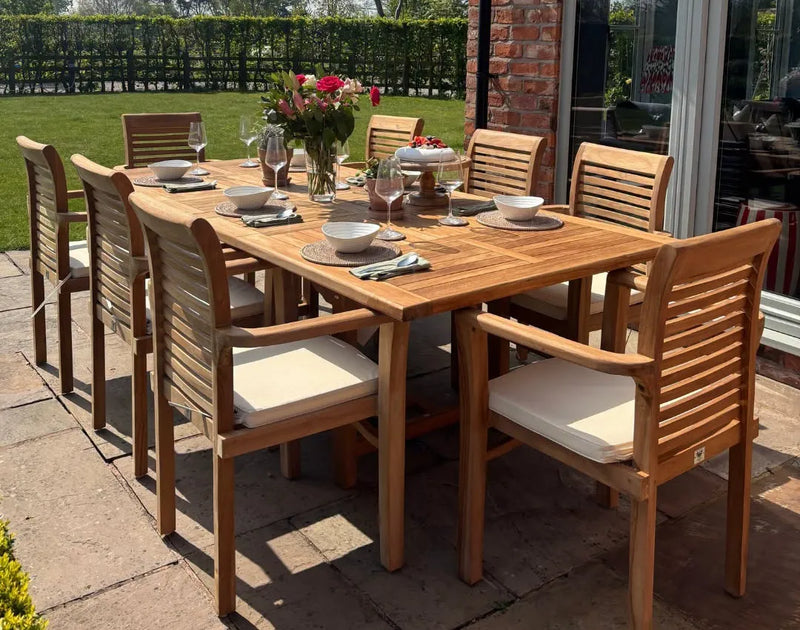
Teak is a hardwood with naturally high oil content, which gives it an exceptional resistance to moisture, rot and insects without any chemical treatment. Left outside year-round, a teak dining set will weather from its original honey-gold tone to a distinguished silver-grey patina. Many owners prefer the aged look. Others maintain the golden colour with an annual application of teak oil - our teak care guide covers the process in full.
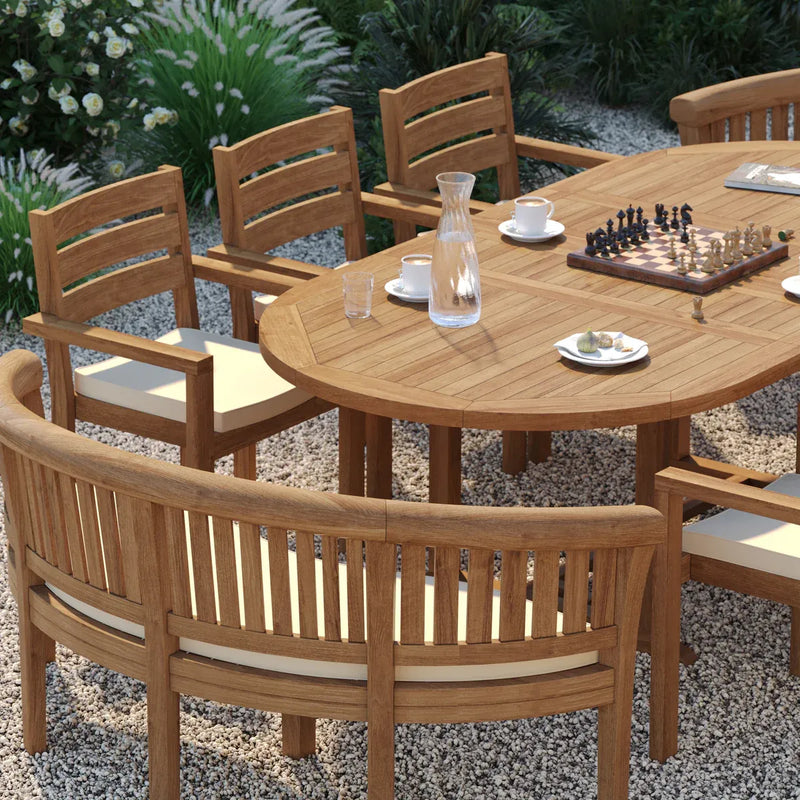
Weight is worth mentioning. A solid teak garden bench is not something you casually rearrange. That heft is part of its stability and quality, but it means teak is best for permanent or semi-permanent setups where furniture stays put through the seasons.
Cost sits at the higher end. A teak garden furniture set is an investment that can serve you for 30 years or more, which changes the maths considerably when compared against replacing cheaper alternatives every few seasons. You are paying once for something built to last.
Rattan and Wicker: Comfort-First and Light on Its Feet
Rattan furniture is where comfort meets casual outdoor living. The woven construction gives a natural flex that hard materials cannot match, making rattan sofas and armchairs genuinely comfortable without cushions (though most sets include them).
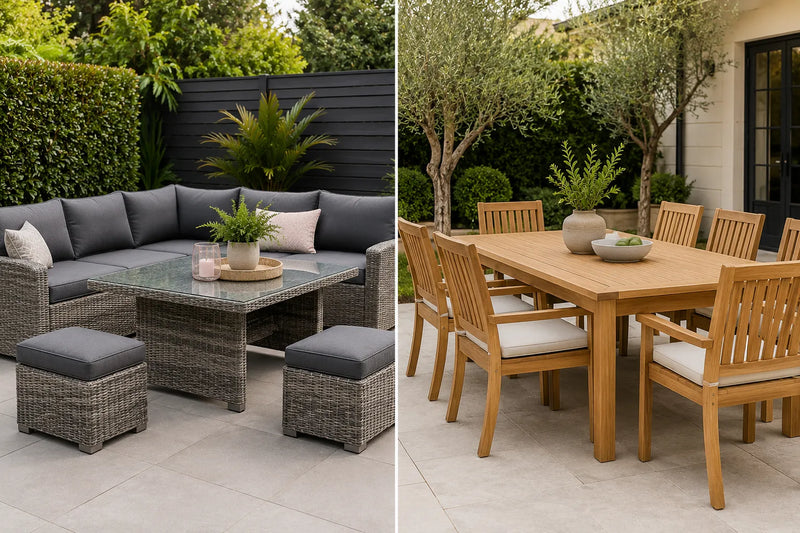
The critical distinction is natural versus synthetic. Natural rattan is an indoor material. It splits and degrades in rain. What you see in most UK garden centres is PE (polyethylene) rattan woven over a steel or aluminium frame. Synthetic rattan handles UV exposure, rain and temperature swings far better than the natural fibre, though quality varies widely between manufacturers.
Weight is a clear advantage. Rattan sets are easy to move, stack and store, which suits anyone who reconfigures their patio through the year. The trade-off is longevity. Even good synthetic rattan will show wear after 8 to 10 years, and cheaper sets can fade or become brittle in as few as three seasons.
Aluminium: Modern, Minimal and Built for Low Maintenance
Aluminium garden furniture has earned its following by solving two problems at once: it is light enough to move with one hand, and it does not rust. Powder-coated aluminium frames resist corrosion, UV fade and general wear with almost zero upkeep. A wipe-down with soapy water is the extent of the maintenance schedule.
Design is where aluminium shines. Slim profiles, clean geometric lines and a range of colour finishes give it a contemporary edge that suits modern patios and urban roof terraces. It pairs well with textilene sling seats, slatted tabletops and mixed-material designs.
The honest limitation is feel. Aluminium lacks the warmth and character of teak and the comfort give of rattan. Sitting on an unpadded aluminium chair in April will remind you that metal conducts cold efficiently. Cushions solve this, but that adds cost and storage requirements. Durability is strong, though dents and scratches on powder coating can expose bare metal over time.
Head-to-Head: Teak vs Rattan vs Aluminium Compared
| Factor | Teak | Rattan (Synthetic PE) | Aluminium |
|---|---|---|---|
| Durability | 25-50+ years with minimal care | 8-12 years (quality dependent) | 15-20 years |
| Weight | Heavy - suits fixed positions | Light to medium | Very light |
| Weather resistance | Excellent - natural oil protection | Good (synthetic), poor (natural) | Excellent - powder coat protects |
| Maintenance | Low - optional annual oiling | Low - hose down, check weave | Very low - wipe clean |
| Price range | Higher investment | Mid-range | Mid-range |
| Comfort (without cushions) | Firm, solid, warm to touch | Good natural flex | Cold, firm, needs cushions |
| Style | Classic, timeless, ages gracefully | Casual, contemporary, relaxed | Modern, minimal, architectural |
| Best for | Permanent dining areas, classic gardens | Lounge sets, conservatories, versatile spaces | Urban patios, balconies, modern gardens |
Which Material for Which Lifestyle?
The entertainer with a large garden. If you host regularly and want furniture that looks better with every passing year, a teak garden dining set is the natural fit. It handles heavy use, stays put in wind and develops character rather than showing its age. For flexible seating numbers, consider an extendable garden table that adjusts from four to twelve places.
The comfort-first lounger. If weekend afternoons mean sinking into a sofa with a book, rattan lounge sets deliver the relaxed feel that hard materials cannot. Look for sets with removable, washable cushion covers and UV-stable weave. If you prefer the durability of solid wood with a lounging setup, our teak garden sofa sets offer a long-lasting alternative.
The low-effort minimalist. If your ideal maintenance routine is nothing at all, aluminium ticks every box. It will not age, will not rot and can be wiped clean in two minutes. Perfect for balconies and smaller modern spaces.
The seasonal rearrangers. If you change your garden layout regularly or bring furniture indoors for winter, lightweight rattan or aluminium makes this practical. Teak stays where you put it.
Mixing Materials: Why Choose Just One?
The best outdoor spaces often combine materials rather than committing to a single one. A teak dining table paired with aluminium-framed chairs gives you the warmth of natural wood where it matters most (the centrepiece) with lightweight, stackable seating that stores easily when you need the space.
Rattan lounge sets work well alongside a teak garden bench for a separate reading corner. The contrast in texture and tone creates visual interest without clashing.
A few practical rules for mixing. Keep the colour palette tight - warm wood tones pair best with charcoal or slate frames rather than bright whites. Match quality levels so one material does not age noticeably faster than another. And use consistent cushion fabrics across different frames to tie the look together.
There is no rule that says your garden must be all one material. The spaces that feel most considered are usually the ones that blend two or three thoughtfully.
Choosing the Right Material for Your Garden
The honest answer is that no single material wins outright. Teak leads on longevity and character. Rattan leads on comfort and portability. Aluminium leads on convenience and modern styling.
Your decision comes down to how you use your garden, how long you want your furniture to last and how much upkeep you are willing to do. For many, the answer is a combination.
If you are starting with one investment piece, a solid teak dining set or teak bench gives you a foundation that will still look right in 20 years. Build around it with rattan or aluminium as your space and needs evolve.
Browse our full garden furniture range or read our teak care guide for more on getting the most from your garden.